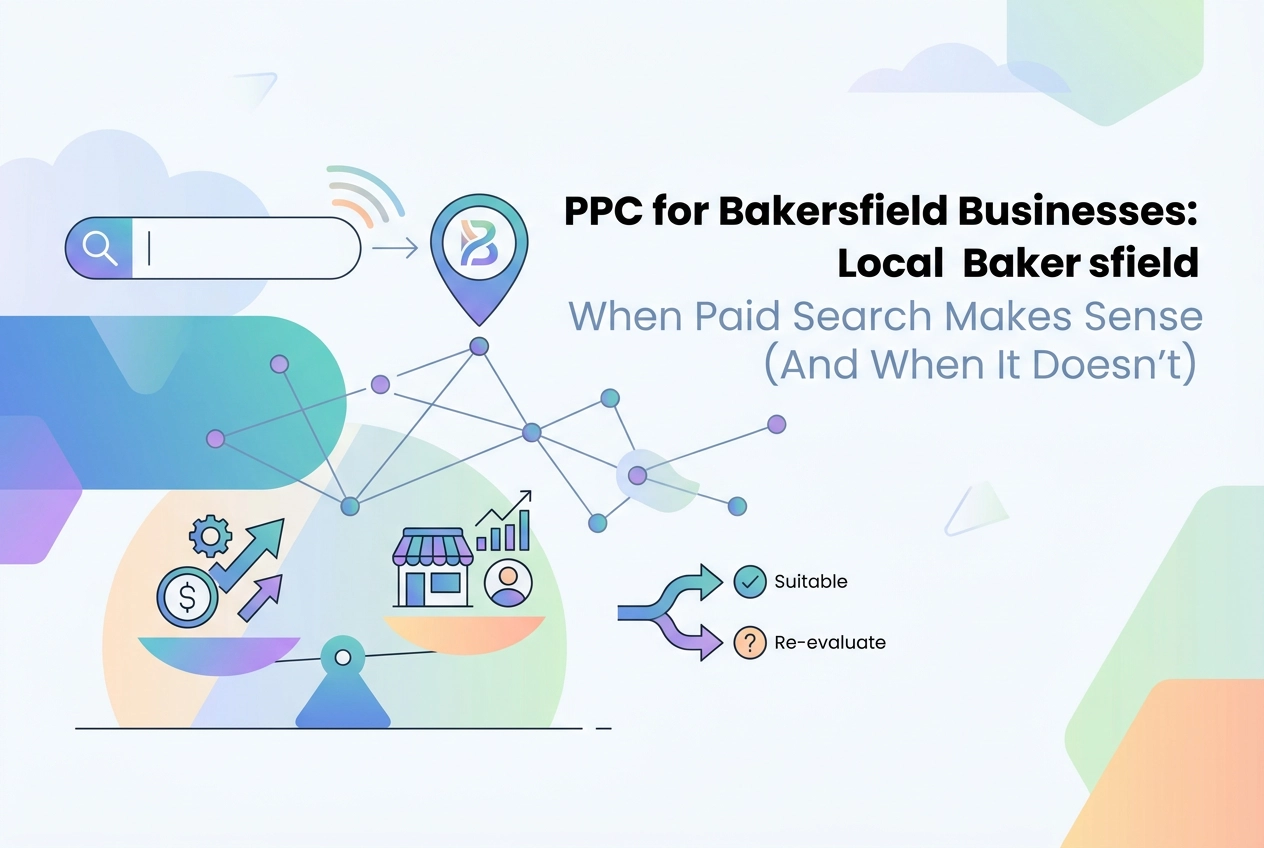
PPC for Bakersfield Businesses: When Paid Search Makes Sense (And When It Doesn't)
Find out when PPC actually works for Bakersfield small businesses, when it burns budget, and how to think about paid search as part of a smarter strategy.
Someone tells you PPC is the fastest way to get new customers. You set up a campaign, start spending, and then a few weeks later you're staring at a credit card bill wondering where all those clicks actually went. Sound familiar? You're not alone.
Pay-per-click advertising gets a lot of hype in the world of digital marketing services, and honestly, some of it is deserved. It can drive real leads to your Bakersfield business in a matter of days. But it can also drain a tight budget fast if the conditions aren't right.
Here's the thing: PPC isn't a magic button, and it's not the right tool for every business or every situation. The goal of this post is to help you figure out where you actually stand.
We'll cover how paid search works at a local level, which types of Bakersfield businesses tend to get the most out of it, what realistic costs look like, and how to weigh PPC against other options like SEO. By the end, you'll have a clearer picture of whether PPC deserves a spot in your marketing plan or whether your budget is better spent somewhere else.
What PPC Actually Is (And What It Isn't)
PPC stands for pay-per-click. Every time someone clicks your ad, you pay a fee, whether that click turns into a customer or not. You're not paying for impressions, brand awareness, or results. Just the click.
Think of it as rented visibility. Your ads appear at the top of Google while your budget is running. The moment you pause the campaign or the money runs out, those ads vanish completely. No residual traffic, no lasting presence. That's the core difference between paid search and organic search: SEO builds something that keeps working over time, while PPC stops the second you stop paying.
Google Ads dominates the paid search landscape, especially for local service businesses. But it's not a simple "pay to play" system. Every search triggers an auction process where advertisers compete for position based on their bid and ad quality. You're not just buying a spot; you're winning it against competitors, one search at a time.
For a clearer picture of how paid search fits into a broader strategy, Wolfpack Marketing's PPC services overview is a solid place to start.
Any experienced digital marketing agency can technically set up a campaign, but setup is the easy part. Whether PPC is actually the right fit for your business, and how it connects to everything else you're doing, matters far more than the mechanics.
How Paid Search Works at the Local Level
When someone in Bakersfield searches "emergency plumber near me," Google instantly runs an auction among competing advertisers. Your ad rank determines placement. That rank combines your bid with your Quality Score, which Google calculates from three factors: ad relevance, landing page experience, and expected click-through rate. A well-built campaign can outrank a bigger spender if the ads and landing page are tighter.
Local targeting is where paid search gets genuinely useful for Bakersfield service businesses. You can limit ads to specific ZIP codes, a radius around your shop, or the neighborhoods you actually serve, eliminating wasted spend on clicks from Fresno or Visalia.
The catch is cost. High-intent keywords in competitive categories like legal, home services, and dental can run well above average CPCs, and that budget disappears quickly without a disciplined strategy.
Here's what most beginners miss: a click is just a visit. If the person doesn't call, book, or fill out a form, that click is gone. Understanding the gap between traffic and conversions is foundational before spending a dollar. It also connects directly to why your broader digital presence and SEO foundation matter so much alongside any paid campaign.
When PPC Makes Sense for a Bakersfield Business
So knowing how clicks get priced is only half the picture. The real question is whether your business is set up to turn those clicks into revenue.
Here's when the answer is likely yes:
You need leads now. As covered earlier, PPC delivers visibility quickly while other channels build over time, that speed advantage is real when your pipeline is empty.
Your ticket value can absorb the cost. A roofing replacement, dental implant, or legal consultation can easily justify a much higher cost per lead than a low-ticket service. A $12 oil change cannot. The math has to work before you spend a dollar.
Your website converts. As covered earlier, paid traffic sent to a slow or unclear site is wasted spend, fix that foundation first.
You're targeting buyers, not browsers. PPC performs best on bottom-of-funnel searches, people ready to book, not people still comparing options. Intent matters more than volume.
You can fund it competitively. Underfunding in a contested local category means your ads lose to better-funded competitors before you gather enough data to learn anything useful.
Your need is time-limited. Seasonal businesses can use PPC as a targeted burst during peak periods rather than an always-on expense. That's a smart, disciplined use of the channel.
If several of these fit your situation, it's worth exploring what a well-matched digital marketing services plan could look like for your business.
When PPC Probably Isn't the Right Move
Of course, PPC isn't the right fit for every Bakersfield business. Here's where the math tends to break down.
Low-margin, high-volume businesses like restaurants, convenience shops, and retail stores are a tough case. If your average sale is $15, you can't profitably pay $8 to $20 per click to earn it. The cost-per-click economics simply don't work at thin margins.
Long sales cycles are another red flag. If you're in commercial real estate, B2B services, or large-scale construction, your buyers aren't Googling and signing contracts the same day. Decisions stretch over weeks or months, across multiple stakeholders. PPC is built for quick-turn intent; it struggles when the buying journey is that long.
Tiny service areas can also be a problem. If you genuinely only serve one neighborhood in Bakersfield, the available search volume may be too small to justify ongoing campaign management costs and monthly ad spend.
Budget is a real constraint. Entering a competitive local category without a budget that can match the field means your ads will lose to better-funded competitors before you gather enough data to optimize.
And as covered earlier, the moment you stop paying, all of that visibility disappears, PPC builds no long-term asset.
What Realistic Costs and Returns Look Like in a Market Like Bakersfield
Mid-size market doesn't mean bargain-bin clicks. Regional chains and national brands bid on the same "emergency HVAC Bakersfield" or "personal injury attorney" keywords you do, keeping costs elevated across legal, home services, and healthcare. You're not competing in a small pond.
A realistic starting budget for a competitive local service category is meaningfully higher than many small businesses expect, ad spend and management fees are two distinct line items.
Your target cost per acquisition matters more than your budget. A personal injury attorney can justify a much higher cost per acquisition than an HVAC company, because case values differ dramatically. Knowing your acceptable number before you start isn't optional.
Plan for a multi-month ramp-up period, Google's algorithm needs time to learn what converts.
A well-managed campaign in the right vertical should produce a clearly positive return on ad spend, your agency or internal team should define that threshold before launch.
None of that math works without proper conversion tracking. If you're not measuring actual calls and form fills, you're guessing. And guessing is expensive.
Which Bakersfield Business Types Tend to Fit PPC Best
So who actually gets the most mileage out of paid search? The answer usually comes down to three things: how urgent the need is, how high the ticket value is, and how cleanly you can track results.
Home services top the list. HVAC repair, plumbing, roofing, and pest control are near-perfect fits. Someone searching "AC repair Bakersfield" isn't browsing, they need help today. The job value is high enough to absorb the cost of a click in this category, and the geographic targeting is straightforward.
Legal and medical practices can work well, though they come with a catch. Personal injury, dental implants, and cosmetic procedures carry high lifetime patient or client value, which justifies aggressive spend. The tradeoff is that CPCs in these verticals run among the highest of any category, so margins on the campaign get squeezed fast if conversion rates slip.
Emergency and urgent-need services are a natural fit for the same reason home services are. When someone's pipe bursts at 10pm, they're clicking the first credible result. There's no comparison shopping, and that compressed decision window is exactly where PPC earns its keep.
New businesses with no organic presence can use PPC as a bridge while SEO builds traction, a strategy covered in more depth in the tradeoffs section.
Finally, any business with trackable conversions (calls, bookings, form fills) gets more out of PPC because they can actually see what works. Without measurable outcomes, optimization is guesswork.
PPC vs. SEO vs. Doing Both: Thinking Through the Tradeoffs
Knowing which businesses fit PPC is useful. Knowing how PPC fits alongside your other marketing is what turns a good decision into a great one.
PPC and SEO aren't rivals; they run on completely different timelines. Paid search delivers results fast, sometimes within days of launch. SEO builds slowly but compounds over time. Organic search drives 53% of all web traffic compared to paid search's 27%, and SEO's average cost per acquisition runs roughly 87% lower than PPC. The tradeoff is simple: as covered earlier, PPC rents visibility while the moment you cut your ad budget your ads vanish, SEO builds an asset that keeps generating traffic.
For Bakersfield businesses watching their budgets closely, the real question isn't "which channel is better?" It's "which gives me the best return right now, given where I am?" That answer genuinely changes as your business grows.
The most practical approach many businesses take is the bridge strategy: run PPC to generate near-term leads while SEO builds organic authority in the background. You're not choosing one or the other; you're sequencing them intentionally.
One thing worth noting: your broader digital presence affects how well PPC performs. Strong branding, solid web design, and active local SEO all improve the conversion rate of paid traffic. A weak website means paid clicks leave without converting, regardless of how well the campaign is built.
Integrated digital marketing strategies consistently outperform single-channel bets for small and mid-size businesses over the long run. Resilience comes from not having all your leads depend on one switch staying on.
Questions to Ask Before Starting a PPC Campaign
Before you commit budget to paid search, run through these six questions honestly.
What is my customer lifetime value, and what can I afford to pay per lead? If a new customer is worth $2,000 over their lifetime, a $75 cost per acquisition is a solid deal. If they're worth $80, that same number puts you underwater. Know your math before you spend a dollar.
Does my website actually convert? (If you're not sure, revisit the earlier section on landing page readiness before spending a dollar.)
Can I sustain 3 to 6 months of spend without needing an immediate return? New campaigns require a learning window. Google's algorithm needs data to optimize, and that takes time and budget. If you need leads by next month to keep the lights on, PPC is a risky bet right now.
Who's managing the campaigns after launch? Neglected accounts get expensive fast. Search CPCs rose 12% year-over-year in early 2026, and accounts with poor Quality Scores pay up to 64% more per click. Someone, whether in-house or through a digital marketing agency, needs to be actively testing and tuning.
Are you set up to track real outcomes? As covered in the costs section, without proper conversion tracking you're measuring the wrong things, clicks and impressions are not results.
Is there a higher-priority fix first? Sometimes the same budget delivers better returns through a website overhaul, local SEO, or reputation management. Be honest about what the actual bottleneck is.
So, Is PPC Right for Your Bakersfield Business?
After working through all those questions, you're probably ready for a straight answer.
PPC is a genuinely powerful tool, but it's not a shortcut, and it's not the right move for every Bakersfield business or every moment in your growth cycle. The businesses that get the most from paid search go in with clear goals, realistic budgets, a website that actually converts, and a commitment to optimizing over time, not just setting campaigns live and hoping for the best.
The section on PPC vs. SEO tradeoffs covers why integrated strategies outperform single-channel bets, the same logic applies here.
If you're still not sure whether PPC fits your situation, that's completely normal, and it's exactly the kind of question worth talking through with someone who knows both the channel and the Bakersfield market specifically.
Ready to own page one in Bakersfield? Wolfpack Marketing works with local businesses to figure out the right mix of paid and organic strategies, whether that means PPC, SEO, web design, or a combination that fits where your business actually is right now.
Conclusion
The businesses that win with paid search treat it as an investment, not an expense. They measure, adjust, and build on what works.
If you've worked through this guide and still have questions about your specific situation, that's the right time to get a second opinion from someone who knows both the channel and the local market.
If you are ready to figure out whether PPC belongs in your marketing mix, Wolfpack Marketing helps Bakersfield businesses make that call with confidence and build strategies that actually deliver.
Frequently asked questions
- What is the main difference between PPC and SEO for getting customers?
- PPC (pay-per-click) delivers fast results—sometimes within days—but stops generating visibility the moment you stop paying. It's considered rented visibility. SEO, by contrast, builds long-term assets that continue generating traffic over time. While SEO takes longer to produce results, it has a significantly lower average cost per acquisition (roughly 87% lower than PPC) and drives more overall web traffic (53% vs. PPC's 27%).
- How much should I expect to spend on a PPC campaign in Bakersfield?
- There's no fixed amount, as costs depend on your industry and competition. However, a realistic starting budget for a competitive local service category should be meaningfully higher than many small businesses expect. Keep in mind that ad spend and management fees are two separate line items. High-intent keywords in competitive categories like legal, home services, and dental run well above average cost-per-click. More importantly, focus on your target cost per acquisition rather than total budget—knowing how much you can afford to pay per lead before you start is essential.
- Which types of Bakersfield businesses benefit most from PPC?
- PPC works best for businesses where: the customer need is urgent (home services, emergency plumbing, HVAC repair), the ticket value is high enough to absorb click costs (legal services, dental implants, cosmetic procedures), and results are easily trackable (calls, bookings, form fills). Businesses with long sales cycles, low margins on high volume, or tiny service areas typically don't see good returns. New businesses with no organic search presence can also use PPC as a bridge while SEO builds traction.
- What are the key questions I should ask before starting a PPC campaign?
- Run through these six critical questions: (1) What's my customer lifetime value and what cost per acquisition can I afford? (2) Does my website actually convert visitors into customers? (3) Can I sustain 3-6 months of spend without needing immediate returns? (4) Who will actively manage and optimize the campaign after launch? (5) Do I have proper conversion tracking set up to measure real outcomes? (6) Is there a higher-priority fix, like website improvements or local SEO, that might deliver better returns first? Honestly answering these helps determine if PPC is truly the right move.
- Should I choose between PPC and SEO, or can I use both strategies together?
- The best approach for most Bakersfield businesses is the 'bridge strategy'—use both together. Run PPC to generate near-term leads while SEO builds organic authority in the background. They operate on different timelines and work together effectively. In fact, integrated digital marketing strategies that combine multiple channels consistently outperform single-channel bets for small and mid-size businesses over the long run. Your broader digital presence (branding, web design, local SEO) also improves how well PPC performs, so building strength across all channels creates resilience and better overall returns.
Ready for more clicks, calls, and customers?
Let's build a marketing system that hunts leads for your Bakersfield business.